Canada’s Instrumentation Leader Since 1946.

Canada’s Instrumentation Leader Since 1946.
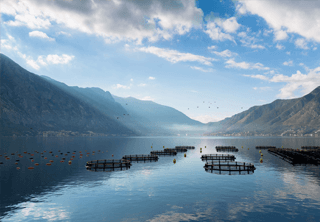
 Hoskin Environmental
Sampling and monitoring instruments for air, water, weather and soil for the environmental, agricultural, mining and research markets.
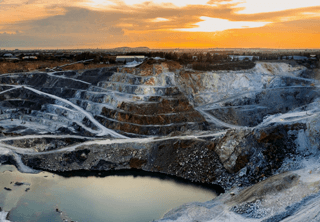
 Hoskin Geotechnical
Materials and Product testing for soil, asphalt, petroleum, concrete, mining, cement, and research industries.

 Hoskin Instrumentation
Sensors, transducers and instrumentation for industry, manufacturing, research and development and factory automation.
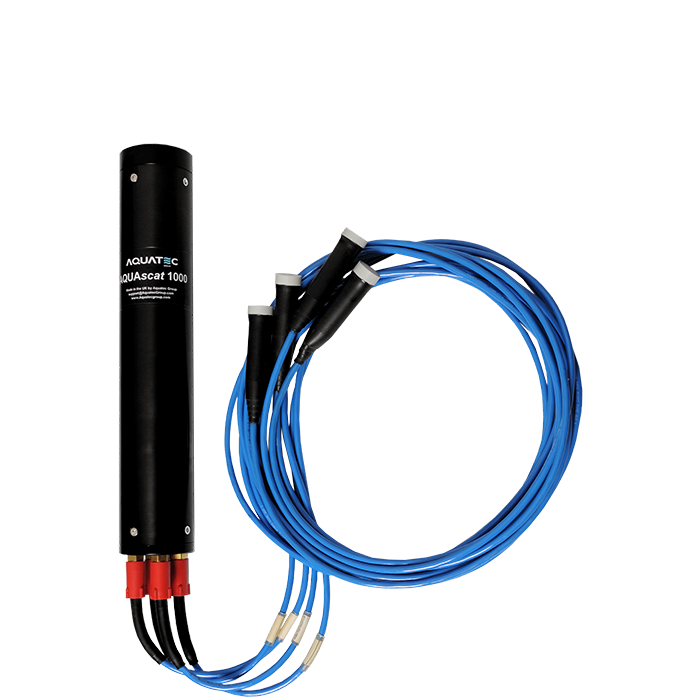
As the flagship model in the AQUAscat® 1000 Range, the 1000R Research model sets the standard in acoustic measurement. It features up to four transducers, each capable of operating at distinct frequencies. This instrument excels in detecting sound scattered by sediment or other suspended materials, with an adjustable resolution range from 2.5 mm to 4 cm.
 Contact us for details
Suspended Particle Profiler – to 1,000 m
Obtain Precise Profiles of Suspended Particle Concentrations Using Multi-Frequency Backscatter Technology
As the flagship model in the AQUAscat® 1000 Range, the 1000R Research model sets the standard in acoustic measurement. It features up to four transducers, each capable of operating at distinct frequencies. This instrument excels in detecting sound scattered by sediment or other suspended materials, with an adjustable resolution range from 2.5 mm to 4 cm. This makes it ideal for a variety of applications, from short-range altimetry spanning a few tens of centimetres to monitoring sediment suspension profiles over 1-2 metres, and even extending to dredge plume estimation up to 10 metres. Housed in a robust subsea casing, it’s ideally suited for long-term, unattended deployments. Customisable battery options are available to suit diverse deployment schedules.
|
Sediment |
Sensitive to a wide range of grain sizes Size inversion typically feasible for 20 μm to 500 μm radius Typically 0.01 g/l to 20 g/l over 1 m, or more over shorter range |
|---|---|
| Frequencies | Up to 4 frequencies, from 500 kHz to 5 MHz |
| Transducers | Typically Ø10-25mm ceramic discs (beam width according to frequency), with other optional configurations. |
| Transducer arrangement |
Individual cabled transducers |
| Gain | Software controlled transmitter and receiver gain adjustment |
| Range | 150 cm (typical), up to 10 m at frequencies below 2MHz depending on options. |
| Transmitted signal | 1 W rms typical transmit CW pulse, pulse length to match cell size. |
| Transmission rate | 128 Hz max pulse rate for each frequency (i.e. 512 pulses per second for four), subject to acoustic range limits. Minimum rate 1 Hz for calibration. |
| Data averaging | Cell ensembles averaged over time by powers of 2 up to 64 before storage |
| Range cells | 256 cells. 2.5 mm, 5 mm, 10 mm, 20 mm and 40 mm at 1500 m/s speed of sound. Start/end range set by software |
| Burst duration | Defined by number of profiles requested |
| Burst trigger | Either external hardware trigger when required or internal software trigger at regular intervals |
| Burst interval | Internally generated from once every minute to once every 255 minutes, user definable start time of first burst. |
| Trigger output | A digital output allows triggering of external instruments |
| Power requirement |
8 V to 24 V dc. Typically 1 W when logging, and with standby of typically 1 mW when not logging. |
| Battery packs | Internal alkaline battery pack gives up to 10 days typical deployment. External battery packs available according to deployment needs. |
| Additional sensors |
Built-in temperature and pressure, optional turbidity |
| Disk storage | Compact Flash (proprietary format). 8 GB standard. |
| Data comms | RS232 up to 115 kbaud; USB 1.1 typically 2-3 Mbaud |
| Housing options | 1000m rated aluminium alloy housing. Greater depths available as custom instruments. |


Copyright - 2026 - Hoskin Scientific

