
 Hoskin Environmental
 Hoskin Geotechnical
 Hoskin Instrumentation

Farm, Field & Vineyard Weather Stations
Evapotranspiration, growing degree days and frost alerts, measured on your own field rather than interpolated from an airport.
A farm weather station earns its keep by measuring the block you farm rather than an airport 40 km away. All-in-one stations, wireless field networks and cellular telemetry from METER and Onset. Specified, calibrated and serviced in Canada by the team that has done it since 1946. Tell us what decision the station has to support and we will specify the sensors that answer it.
Ask a Question / Request a Quote
Our team replies within one business day with pricing, lead time and a recommendation.
No obligation. We respond within one business day.
Match the station to the decision
Nobody buys a mast for the weather. A station on the farm is bought to produce decisions, and the sensor list falls out of the decision rather than the other way round. Start from what you need to decide.
| Evapotranspiration & crop water use | Reference ET, calculated by the FAO-56 Penman-Monteith method, from solar radiation, air temperature, relative humidity and wind speed measured at the site. This is the input for irrigation scheduling, precision and deficit irrigation, water use efficiency reporting and variable rate zoning. It needs all four measurements from one properly sited station, which is what an all-in-one instrument delivers. |
|---|---|
| Growing degree days & degree day models | Accumulated heat units from on-site air temperature, driving phenology, harvest timing and insect degree day models. Regional airport data is often several hundred degree days out by the end of a season in a valley or a coastal block. |
| Frost monitoring & frost protection | Air temperature at canopy height, wind speed and relative humidity, logged at short intervals and pushed to the cloud so an alert reaches you at 03:00 rather than a spreadsheet the following week. Orchard and vineyard frost protection depends on knowing the temperature in the block, which can differ from the block next to it by several degrees. |
| Spray windows & drift records | Wind speed and direction, temperature, humidity and rainfall determine whether the window is open, and give you the record afterwards. Drift complaints and buffer zone questions are answered with logged site data, not recollection. |
| Disease forecasting | Most published plant disease models run on leaf wetness duration, relative humidity and air temperature. Leaf wetness is the measurement growers most often leave out, and then cannot run the model. METER PHYTOS 31 leaf wetness sensors log onto the same ZL6 as the rest of the station. |
| Drought stress, crop scouting & yield monitoring | Weather data becomes far more useful paired with what the soil is doing. A station plus root-zone soil moisture and water potential explains why one part of a field is stressed and another is not, and gives crop scouting and yield monitoring a physical cause rather than a correlation. |
Not sure how much station you need? Send us the crop, the site and the decision you are trying to make: irrigation, frost, spray timing or disease. Our application specialists will specify the station that answers it, and tell you which sensors you can leave off.
Farm weather stations, sensors and loggers
Everything below is supported, calibrated and serviced in Canada. Follow any instrument for full specifications.
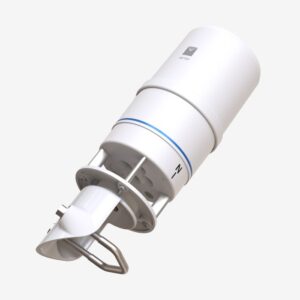
METER ATMOS 41 Gen 2
All-in-one station with no moving parts: solar radiation, precipitation, air temperature, relative humidity, barometric pressure, wind speed, gust and direction, vapour pressure and lightning. One cable, one mast, everything ET needs.
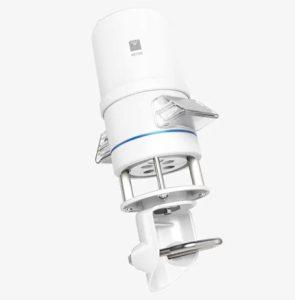
METER ATMOS 41W Wireless
The same all-in-one measurement set with wireless upload built in, for sites where running a logger cable to a mast is impractical or where the station has to move between blocks.
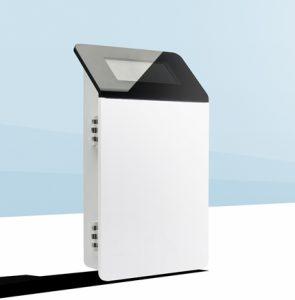
METER ZL6 Advanced Logger
Six-sensor logger with cellular upload straight to ZENTRA CLOUD. Mix the station with soil moisture, water potential and leaf wetness on the same logger and the whole site reports together.
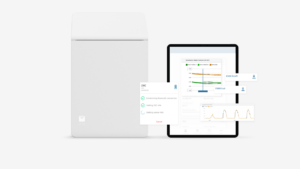
METER ZENTRA CLOUD
Where the data lands. Charting, alerting on threshold crossings, scheduled export and API access, so measurements reach your own dashboards, agronomic models or farm management software.
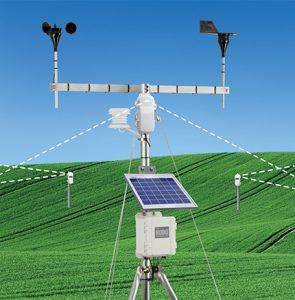
Onset HOBOnet Field Monitoring System
A wireless sensor network rather than a single station. One manager at the centre of a field, sensor nodes distributed across it, and one data set covering spatial variation instead of one point.
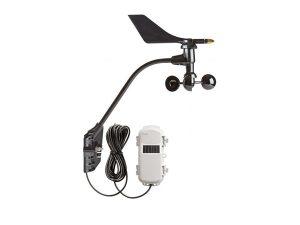
Onset HOBOnet Wind Speed & Direction
Wireless wind measurement for spray window decisions and for the wind component of ET, reporting into the same HOBOnet network as the rest of the field.
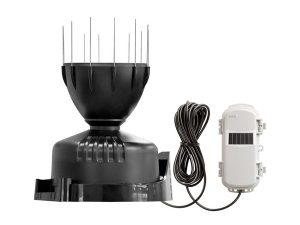
Onset HOBOnet Rainfall
Tipping-bucket rainfall on the wireless network, in metric or imperial. Rain at the block is frequently nothing like rain at the farmyard, and irrigation decisions are made on the former.
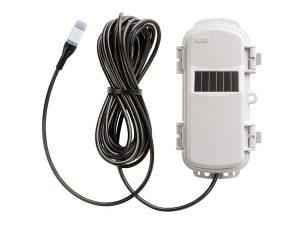
Onset HOBOnet Temperature & RH
Distributed air temperature and relative humidity for frost mapping, degree day accumulation and disease model inputs across a block rather than at one mast.
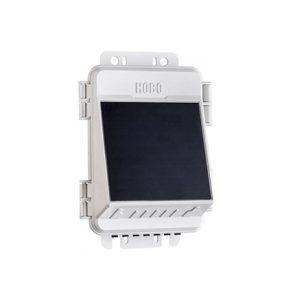
Onset HOBO MicroRX Station
Compact cellular station for a small number of sensors where a full field network is more than the site needs. Data to HOBOlink without a site visit.
Specifying the station: sensors, siting and telemetry
Three decisions determine whether a station is still useful in five years: what it measures, where it stands, and how the data gets off it. We work through all three before quoting.
| All-in-one or discrete sensors | An all-in-one instrument such as the ATMOS 41 Gen 2 has no cups, no vane and no moving parts to seize, and it is one calibration item rather than six. Discrete sensor arrays remain the right answer where a specific research-grade radiation or wind specification has to be met, or where the station has to match an existing network. |
|---|---|
| One station or a wireless network | A single mast characterises a site. A HOBOnet field monitoring system characterises the variation within it. If your problem is frost pockets, cold-air drainage or a block that always ripens late, one station will not show it and a network will. |
| Siting | Height, fetch, proximity to canopy, shelter and irrigation spray all change the numbers, and the exposure conventions those numbers assume are set out in the WMO Guide to Instruments and Methods of Observation (WMO-No. 8). Send us a site sketch or a satellite image with the intended mast position and we will comment before you build the tripod, not after the first season of data. |
| Power & telemetry | Solar and battery power with cellular upload is the normal configuration on farm. The METER ZL6 uploads to ZENTRA CLOUD; the Onset MicroRX and the RX3000 remote monitoring station upload to HOBOlink. Ask us about cellular coverage at the site before ordering, it is the single most common cause of a station that logs happily and never reports. |
| Adding soil to the station | Weather explains demand; soil explains supply. METER TEROS soil moisture, water potential and temperature sensors and PHYTOS 31 leaf wetness share the ZL6 logger with the station, so one site produces one data set. |
| Data out | ZENTRA CLOUD provides scheduled export and API access; HOBOlink provides scheduled export. Both mean your agronomist, your model or your farm management software can consume the data without anyone downloading a file. |
What Canadian growers use these stations for
The same hardware is bought for very different reasons. These are the applications that account for most of the stations we specify.
- Orchard and vineyard frost protection: canopy-height air temperature and wind logged at short intervals, with cloud alerting on a threshold you set, so wind machines, irrigation or heaters start on a measured number rather than a forecast. Multiple nodes across a block show where cold air pools and where protection is actually needed.
- Irrigation scheduling and deficit irrigation: reference ET from the station, crop coefficient from the crop, and soil water content or water potential from the root zone. Together they tell you how much to apply and when to stop, and for deficit programmes how much stress you are actually imposing.
- Spray windows and drift records: wind speed and direction, temperature and humidity at the block, logged continuously. Both a live decision tool and a defensible record of the conditions at the time of application.
- Disease forecasting: leaf wetness duration, relative humidity and temperature feed the published plant disease models for your crop. Adding a leaf wetness sensor to an existing station is usually the cheapest single improvement available to a spray programme.
- Fertigation, nutrient and salinity management: bulk electrical conductivity in the root zone shows where fertiliser is going and whether salts are accumulating. Paired with rainfall and ET, it explains leaching events instead of leaving you to guess at them.
- Research stations and variety trials: trial work needs data that is traceable and comparable across sites and seasons. Calibrated instruments, documented calibration and a consistent station specification across plots are what make the data publishable.
Why specify through Hoskin Scientific
Pre-purchase consultation
Our application specialists match the sensor to the measurement and the site before you buy, a recommendation, not a catalogue.
Calibration and service in Canada
Factory-trained technicians at four Canadian service centres in Coquitlam, Oakville, Lachine and Edmonton calibrate and service instruments to the manufacturer’s published procedure, with documentation for every job.
7–10 day turnaround
Standard calibration turnaround from receipt at a Canadian centre, with rush service available for time-critical field programmes.
Service across the season
Long-running programmes depend on instruments staying calibrated season after season. Annual and semi-annual contracts bundle calibration, maintenance and consumables.
Stock in Canada
Stocked items normally ship within 1–3 business days from a Canadian warehouse, with lead times confirmed on every quote.
Related monitoring applications
Frequently asked questions
What does a weather station on my farm give me that the regional forecast does not?
Measurement instead of interpolation. Growing degree days, reference evapotranspiration and leaf wetness duration are accumulated quantities, so a small daily error becomes a large seasonal one. A station 30 or 40 km away, usually at an airport on flat open ground, does not see cold-air drainage into your lowest block, a rain cell that missed you, or the humidity under your own canopy. If a decision is worth money, it should be made on data from the block that decision applies to.
Which station should I use for frost monitoring in a vineyard or orchard?
For a single site, an all-in-one station such as the METER ATMOS 41 Gen 2 on a ZL6 logger gives canopy-height air temperature, humidity and wind with cellular upload and threshold alerting through ZENTRA CLOUD. For a block with known frost pockets, an Onset HOBOnet field monitoring system with several wireless temperature and RH nodes is usually better, because it tells you which part of the block is at risk rather than reporting one number for the whole property. Many operations run both.
Can I get the data into my own agronomic model, dashboard or farm software?
Yes. ZENTRA CLOUD provides scheduled data export and API access for METER stations and loggers, and HOBOlink provides scheduled export for Onset stations and HOBOnet networks. Tell us what the receiving system is and what interval and parameters it expects, and we will confirm the configuration before you order.
How many weather stations do I need to cover a farm?
One well-sited station is enough to calculate reference ET and degree days for a block of uniform aspect, elevation and exposure. Cross a ridge, drop into a valley, change from open field to sheltered orchard, or move more than a few kilometres, and you are describing a different microclimate. Most operations run one full station per distinct microclimate and then use wireless temperature, humidity, rainfall or soil nodes to fill in the variation within it.
Do you calibrate and service weather stations in Canada?
Yes. Hoskin Scientific calibrates and services instruments from four Canadian service centres, handled by factory-trained technicians working to the manufacturer's published procedure, and we are the exclusive certified Canadian service centre for Onset. Standard turnaround is 7-10 business days from receipt, rush service is available, and every calibration is documented for audit.
Tell us what decision the station has to support
Send us the crop, the site and what you need to decide: irrigation, frost, spray timing or disease. We will specify the station that answers it, and tell you which sensors you do not need.
Request a quote →


