
 Hoskin Environmental
 Hoskin Geotechnical
 Hoskin Instrumentation

Plant Science Instruments for Canadian Research
Gas exchange, chlorophyll fluorescence, porometry, canopy structure, quantum and radiation measurement and root imaging.
Plant science instruments from LI-COR, CID Bio-Science, Apogee, Delta-T Devices, Opti-Sciences and METER, supplied, calibrated and serviced in Canada since 1946 for universities, research stations and government laboratories. Tell us the measurement and the method and we will confirm the instrument, the accessories and the lead time in writing.
Ask a Question / Request a Quote
Our team replies within one business day with pricing, lead time and a recommendation.
No obligation. We respond within one business day.
Measurement first, model number second
Most enquiries arrive as a model number, because a paper used it. Tell us the measurement and the method as well, and we will confirm whether that instrument is the one you need, an over-specification, or the wrong measurement entirely.
| Leaf gas exchange & photosynthesis | Net assimilation, transpiration and intercellular CO2 under controlled chamber conditions. Full environmental control and A/Ci or light-response curve work: LI-COR LI-6800. Survey-scale field measurement at ambient conditions: CID CI-340 handheld photosynthesis system. |
|---|---|
| Chlorophyll fluorescence | Photosystem II efficiency, Fv/Fm and quenching parameters for stress physiology. Available as a dedicated portable fluorometer, as a combined porometer-fluorometer (LI-COR LI-600 and LI-600N), and as a fluorometer integrated with a gas exchange system for simultaneous measurement. |
| Stomatal conductance & porometry | Conductance to water vapour at the leaf surface. The LI-COR LI-600 makes a porometry and a fluorescence measurement in the same few seconds on the same spot, which is why it has largely displaced sequential measurement in survey work. Diffusion porometers remain available where the method specifies one. |
| Chlorophyll content | Non-destructive relative chlorophyll and nitrogen status from leaf transmittance. Opti-Sciences CCM-200plus and Apogee MC-100 chlorophyll content meters. See the FAQ below on SPAD-type measurements. |
| Canopy structure & leaf area index | LAI, canopy gap fraction and light interception. Ceptometry with the METER AccuPAR LP-80 or the Delta-T SunScan; hemispherical image capture and analysis with the CID CI-110 plant canopy imager, which captures and analyses in one instrument in the field. |
| Radiation: PAR, quantum & pyranometry | Photosynthetic photon flux density from Apogee and LI-COR quantum sensors, including full-spectrum and extended-PAR (400–750 nm) variants, plus line and underwater quantum sensors and thermopile and silicon pyranometers for total shortwave. See the radiation section below for how to choose between them. |
| Leaf area & leaf spectral properties | Destructive and non-destructive leaf area with laser leaf area meters and image analysis. Leaf-level reflectance, transmittance and absorbance across the visible and near infrared with the CID CI-710S SpectraVue leaf spectrometer. |
| Root architecture & minirhizotron | In-situ root imaging through installed clear access tubes, repeated over a season without destructive sampling. CID CI-600 in-situ root imager, and the CID CI-602 narrow gauge version where tube diameter or soil disturbance is constrained. |
| Plant & stem water potential | Pressure chamber and stem water potential methods sit outside the product set listed below. Tell us the method and the species you are working with and our specialists will confirm the current options before you commit to a purchase. |
| Soil respiration & CO2 flux | Chamber-based soil CO2 efflux is a frequent companion measurement to canopy gas exchange. Contact us with the chamber type, collar dimensions and flux range required and we will confirm what we can supply. |
Send us the paper, the protocol or the standard you are working to. Our application specialists will confirm whether the instrument named in it is still current, what has replaced it, and whether a comparable instrument produces data reviewers accept as equivalent, before a purchase order is written, not after.
Plant science instruments, model by model
CID Bio-Science product pages on this site are titled by function rather than by model number. Each card below names the model so you know which instrument you are opening.
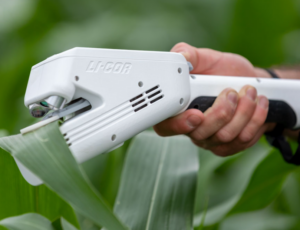
LI-COR LI-600 / LI-600N
Stomatal conductance and chlorophyll fluorescence from the same leaf spot in a single handheld measurement. The LI-600N adds the measurement rate and throughput required for large survey and phenotyping campaigns.
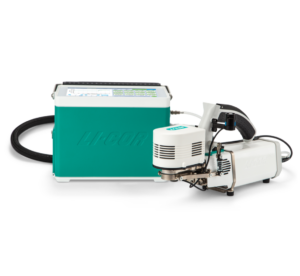
LI-COR LI-6800
Full control of chamber CO2, humidity, temperature and light for A/Ci curves, light-response curves and fluorescence measured simultaneously with gas exchange. The reference instrument for published leaf-level work.
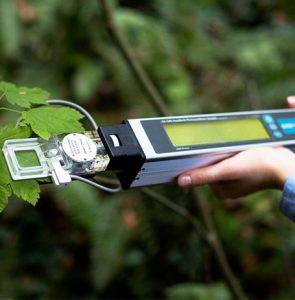
CID CI-340 Handheld Photosynthesis System
Compact open-system gas exchange for field survey work at ambient conditions, with configurable modules. Listed on this site as “Handheld Photosynthesis System”.
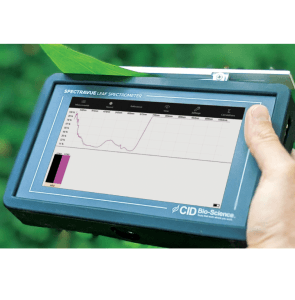
CID CI-710S SpectraVue
Leaf-level reflectance, transmittance and absorbance across the visible and near infrared, with vegetation indices calculated in the field. Listed on this site as “SpectraVue Miniature Leaf Spectrometer”.
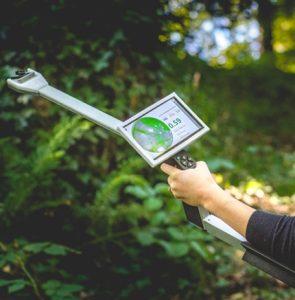
CID CI-110 Plant Canopy Imager
Hemispherical canopy imaging with LAI, gap fraction and PAR calculated on the instrument. Capture and analysis in the field in one pass. Listed on this site as “Plant Canopy Imager”.
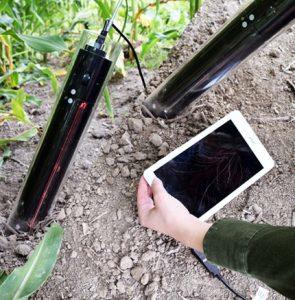
CID CI-600 In-Situ Root Imager
Minirhizotron root imaging through installed clear access tubes, repeated through a season on the same roots without destructive sampling. Listed on this site as “In-Situ Root Imager”.
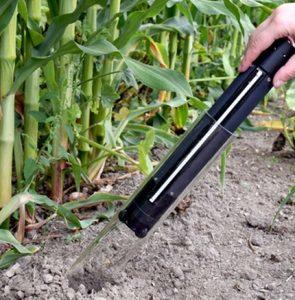
CID CI-602 Narrow Gauge Root Imager
The narrow-gauge minirhizotron for smaller access tubes, restricted plots and pot studies where a full-diameter tube would disturb the system under study. Listed on this site as “Narrow Gauge Root Imager”.
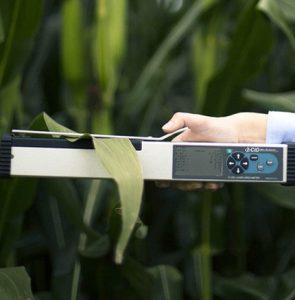
CID CI-203 Handheld Laser Leaf Area Meter
Non-destructive leaf area, length, width, perimeter and shape factors measured in the field on the intact plant. Listed on this site as “Handheld Laser Leaf Area Meter”.
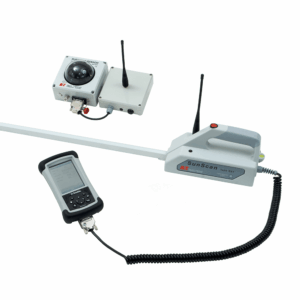
Delta-T SunScan Canopy Analysis System
Sixty-four-sensor PAR probe with a beam fraction sensor, giving LAI and transmitted PAR beneath a canopy in a single traverse. A field standard for row-crop and forest canopy work.
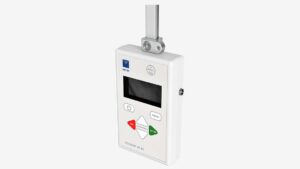
METER AccuPAR LP-80 Ceptometer
Eighty-sensor linear PAR ceptometer computing LAI in the field from above- and below-canopy PAR. Fast, robust and widely cited in the agronomic literature.
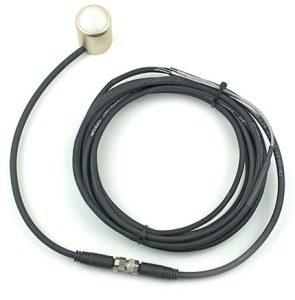
Apogee SQ-500 Full-Spectrum Quantum Sensor
Silicon quantum sensor with a spectral response designed for both sunlight and LED sources, the reason it has replaced older PAR sensors in controlled-environment work. Listed on this site as “Full Spectrum Quantum Sensor”.
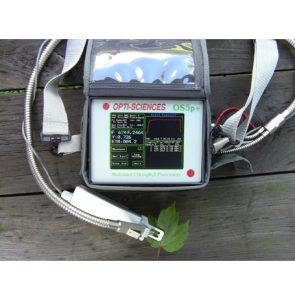
Opti-Sciences Portable Chlorophyll Fluorometer
Dedicated portable fluorometry for Fv/Fm and quenching analysis where a standalone fluorometer, rather than a combined instrument, is what the protocol calls for.
Choosing between a quantum sensor, a pyranometer and a spectrometer
These three instruments measure different physical quantities and are not interchangeable. Reviewers notice when the wrong one was used.
| Quantum / PAR sensors | Photosynthetic photon flux density in µmol m⁻² s⁻¹ over 400–700 nm. Apogee SQ-500 and the SQ-520 USB smart sensor; the MQ-500 handheld meter. LI-COR LI-250Q PAR package for meter-plus-sensor field work. |
|---|---|
| Extended PAR (ePAR, 400–750 nm) | Where the far-red contribution to photosynthesis is part of the question, particularly under LED, the Bugbee and Zhen work behind the extended 400–750 nm range is why the definition of PAR is being revisited. Apogee SQ-610 ePAR sensor and the DLI-600 daily light integral and photoperiod meter. |
| Line & underwater quantum sensors | Spatially averaged PAR beneath a canopy or in water. LI-COR LI-191R line quantum sensor, LI-192 underwater and LI-193 spherical underwater quantum sensors for scalar irradiance. |
| Pyranometers | Total shortwave irradiance in W m⁻², an energy balance measurement, not a photosynthesis measurement, and the correct input for evapotranspiration models. Silicon (LI-COR LI-200R) where cost and response speed matter; thermopile first class and digital secondary standard instruments where the ISO 9060 classification has to be met. |
| Spectral & index measurement | Spectral distribution rather than an integrated value: the LI-COR LI-180 spectrometer for source characterisation under LED, and the NDVI sensor for continuous canopy index monitoring. |
| Calibration & traceability | Radiation sensors drift. If the data supports a publication, a tender or a multi-year time series, the sensors need a documented recalibration interval. We handle that in Canada, to the manufacturer’s published procedure, with written documentation for every calibration. |
What a research purchase usually needs beyond the instrument
The instrument is rarely the whole requirement. These are the parts of a research purchase that most often decide whether the work happens on schedule.
- Matching the instrument to a published method. Ssend us the paper, the protocol or the standard. Our application specialists will confirm whether the instrument named in it is still current, what has replaced it, and whether a comparable instrument will give you data that reviewers accept as equivalent.
- Quotations for grants and tenders: written quotations with itemised accessories, landed cost, lead time and validity period, in the format procurement and granting agencies ask for. Sole-source and comparison documentation available where the tendering process requires it.
- Documented calibration for publication: calibration and service from four Canadian service centres, every job documented. Annual or semi-annual service contracts keep a multi-year time series defensible instead of drifting.
- Training and commissioning: factory-trained technicians provide on-site installation and commissioning across Canada. For instruments where technique determines data quality (gas exchange and fluorometry in particular), the first session with a new graduate student is worth scheduling deliberately.
- Parts, consumables and repair in Canada: chemicals, chamber gaskets, desiccants, cables and spares held or sourced through Canadian offices, so an instrument does not sit idle through a field season waiting on a cross-border shipment.
Why specify through Hoskin Scientific
Pre-purchase consultation
Our application specialists match the sensor to the measurement and the site before you buy, a recommendation, not a catalogue.
Calibration and service in Canada
Factory-trained technicians at four Canadian service centres in Coquitlam, Oakville, Lachine and Edmonton calibrate and service instruments to the manufacturer’s published procedure, with documentation for every job.
7–10 day turnaround
Standard calibration turnaround from receipt at a Canadian centre, with rush service available for time-critical field programmes.
Service across the season
Long-running programmes depend on instruments staying calibrated season after season. Annual and semi-annual contracts bundle calibration, maintenance and consumables.
Stock in Canada
Stocked items normally ship within 1–3 business days from a Canadian warehouse, with lead times confirmed on every quote.
Related monitoring applications
Frequently asked questions
Do I need a full photosynthesis system, or will a porometer-fluorometer do?
It depends on whether you need controlled conditions. The LI-COR LI-6800 controls chamber CO2, humidity, temperature and light, which is what A/Ci curves, light-response curves and any work requiring a defined reference environment demand. The LI-600 measures stomatal conductance and chlorophyll fluorescence at ambient conditions in a few seconds per leaf, which is what large survey campaigns, phenotyping and screening demand. If your protocol specifies a controlled reference CO2 concentration, a porometer will not substitute.
Do you sell a SPAD meter?
No. SPAD is Konica Minolta's product name and we do not distribute that line. We supply chlorophyll content meters that make the same non-destructive optical transmittance measurement of relative leaf chlorophyll: the Opti-Sciences CCM-200plus and the Apogee MC-100 chlorophyll concentration meter. Readings from different chlorophyll meters are not numerically interchangeable, so if you are continuing an existing time series or replicating a published protocol, tell us which instrument produced the original data and we will advise on comparability before you order.
Which instrument should I use for leaf area index?
Three approaches, all supported. Ceptometry with the METER AccuPAR LP-80 or the Delta-T SunScan derives LAI from above- and below-canopy PAR and is fast, robust and well established in the agronomic literature. Hemispherical imaging with the CID CI-110 plant canopy imager captures canopy architecture and gap fraction and gives you an image you can re-analyse later. Continuous monitoring of canopy development is better served by a fixed NDVI sensor.
What calibration documentation do I receive, and how often should instruments be recalibrated?
Every calibration performed at one of our four Canadian service centres is documented, carried out by factory-trained technicians working to the manufacturer's published procedure. Standard turnaround is 7-10 business days from receipt, with rush service available. Recalibration intervals are instrument-specific: radiation and quantum sensors drift and are commonly recalibrated annually or every two years, while gas exchange systems need their own regular verification against reference gases.
Send us the measurement, the method and the species
Our application specialists will confirm the instrument, the accessories you actually need, the calibration package and the lead time, in writing, in a format procurement will accept.
Request a quote →


