Canada’s Instrumentation Leader Since 1946.

Canada’s Instrumentation Leader Since 1946.

 Hoskin Environmental
Sampling and monitoring instruments for air, water, weather and soil for the environmental, agricultural, mining and research markets.

 Hoskin Geotechnical
Materials and Product testing for soil, asphalt, petroleum, concrete, mining, cement, and research industries.

 Hoskin Instrumentation
Sensors, transducers and instrumentation for industry, manufacturing, research and development and factory automation.
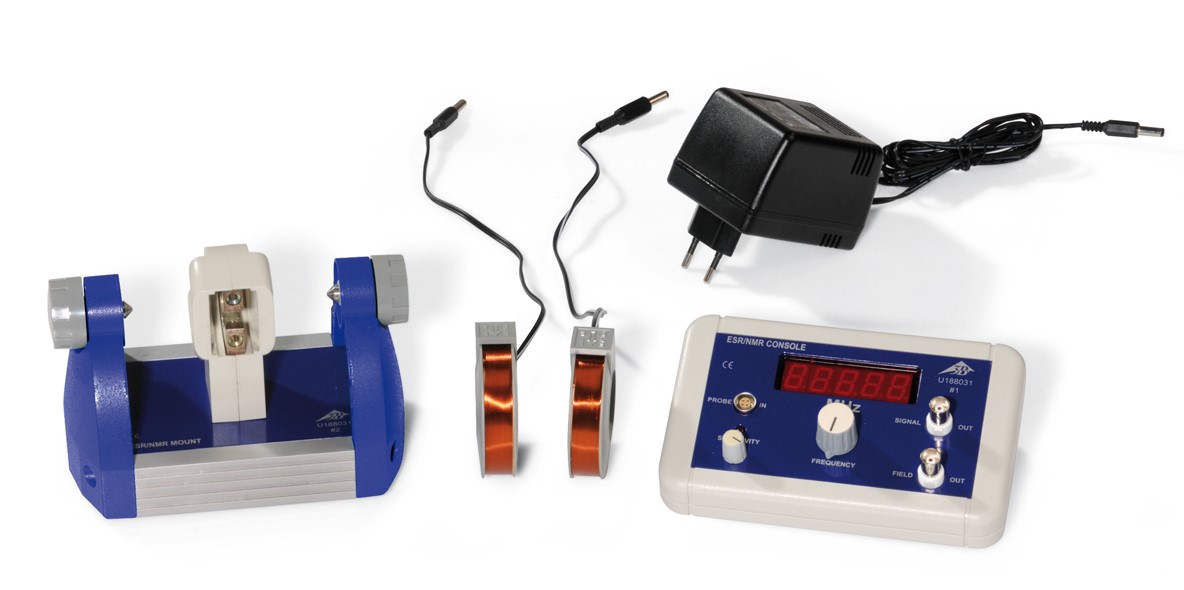
With electron spin resonance (ESR) spectroscopy compounds having unpaired electrons can be studied.
 Contact us for details
Principle
With electron spin resonance (ESR) spectroscopy compounds having unpaired electrons can be studied. The physical background of ESR is similar to that of nuclear magnetic resonance (NMR), but with this technique electron spins are excited instead of spins of atomic nuclei. The g-factor of a DPPH (Diphenylpikrylhydrazyl) specimen and the halfwidth of the absorption line are determined, using the ESR apparatus.
Benefits
Tasks
Learning objectives


Copyright - 2026 - Hoskin Scientific

